
Top CV Mistakes to Avoid in Law Firm Applications
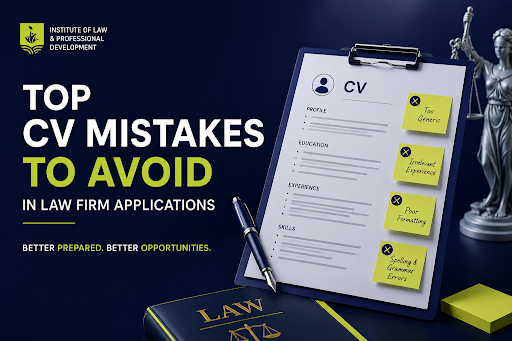

Gone are the days when simply having a law degree and graduating from law school was enough to guarantee you a decent job at a law firm.
If there’s one thing that is true about the job market for lawyers, especially in law firms, it is the fact that it is highly competitive. And from all indications, it’s going to remain that way for the foreseeable future. This is especially true for the highly sought-after top-tier law firms we all know.
For this reason, it is crucial to have a properly optimized CV if you’re going to land that dream role at a top law firm. Your CV is often the first (and sometimes only) thing a recruiter sees before deciding whether you proceed to the next stage of the hiring process. This means a single error or misstep can knock you out in seconds. Many career experts and recruiters have explained that CVs riddled with common, easily fixable mistakes often get silently discarded in 30 seconds or less.
Here, we break down the most common CV mistakes young lawyers and fresh law graduates make in their CVs when applying to law firms and how to fix them.
Presentation & Formatting Errors
- Spelling and Grammatical errors: in applications to law firms, even minor spelling or grammatical mistakes scream “careless.” Considering the nature of the work, law firm recruiters are especially particular about their lawyers having a keen attention to detail and impeccable English. Spelling and grammar errors can make you look unprofessional or inept. Always spell-check and proofread your CV before sending it. Reading your CV aloud or asking someone else to review it can catch mistakes you may otherwise overlook. You can also use online grammar checker tools (such as Grammarly) to proofread your CV.
- Unprofessional Email/Contact Info: Use a simple, professional email (e.g., firstname.lastname@gmail.com), not slang or nicknames. Busy law firm recruiters will likely not take an application from realestbro101@gmail.com seriously. Similarly, include only essential personal details. Avoid irrelevant info like religion, marital status, or a photo (unless specifically requested); these add bias and clutter with no real value. Some recruiters may even interpret it as an attempt to gain favour, which can end up working against you.
- Overly Fancy Design: unless you’re applying to be the firm’s graphics designer, there’s no need to have a fancy, colourful CV. Creative CV templates (columns, color blocks, infographics, etc.) might look cool, but they often backfire. Law firm recruiters care more about the content of the CV and the convenience of skimming through it than any fancy designs. Stick to a simple, clean layout (clear headings, readable font, bullet points) so nothing important is missed.
- Sending a Lengthy and Unstructured CV: as a recent graduate or young lawyer, a 1 – 3-page CV is usually enough. A lengthy CV without substantial relevant information signals padding, which recruiters frown at. Your CV is not the place to tell the firm all there is to know about you. Be ruthless: cut out irrelevant jobs or hobbies, and focus on the skills and experiences relevant to the role.
Content & Personalization Mistakes
- Sending a Generic CV (Not Tailored): Sending the same CV to every firm is a risky move that could easily backfire. This is because law firms have different practice areas they specialise in and different expectations for the lawyers they intend to recruit. Even the firms engaged in general practice may often recruit for a specific practice area, or to perform specific tasks (such as appearing in court or liaising with regulatory agencies). Always tweak your CV to highlight skills and experiences that match the specific job posting. It may take a bit more time, but it shows genuine interest and makes your CV stand out.
- Overloading your CV with Irrelevant Details: Many applicants clutter their CVs with unrelated jobs, qualifications, and hobbies. Listing any random job (such as your work as a salesperson during your school break) wastes space. Only include work or internships that tie into law or transferable skills. If you helped run your student chambers, volunteered at a legal aid clinic, or held a position in your school’s SUG judiciary, highlight them. These demonstrate leadership, resourcefulness, and competence in the legal sphere. Conversely, skip completely unrelated roles unless you can very briefly use them to demonstrate a skill (like teamwork or problem-solving).
- Use of Clichés and Vague Statements: Phrases like “hardworking and motivated” or “excellent team player” don’t prove anything. Your CV should show, not tell, by giving concrete examples. Instead of simply describing yourself as “resourceful,” you could instead tie the skills to outcomes: e.g., “Led a team to win the Gani Fawehinmi moot court competition”. This way, the recruiter can clearly see your skills in action and the results they produced.
- Weak or Missing Summary: The Professional Summary at the top of your CV is a chance to immediately capture the recruiter’s attention and demonstrate your value from the outset. Unfortunately, many applicants either ignore this section or clutter it with generic buzzwords that turn recruiters off. Your summary is an opportunity to highlight your most relevant achievements, experience, interests, and goals rather than meaningless descriptive buzzwords like “hardworking,” “resourceful,” and the like.
- Exaggeration or Lies: Since many applicants now fill their CVs with lies and overstatements, recruiters have also learned to detect lies from a mile away. For this reason, you should be 100% honest about everything on your CV. Never write what you cannot defend on your CV. Aside from being unethical, you would likely be found out during the interview phase anyway, so why bother? Law firm interviews probe everything you say on your CV, so padding your CV can backfire badly. If you claim involvement in a case or project, be prepared to discuss it in detail. If you claim a keen interest in a particular area of law, don’t be surprised when questions are thrown at you from that area during the interview. In all you do, remember that honesty is the best policy.
- Failing to Highlight Law-Relevant Achievements: While some applicants make the mistake of providing irrelevant experience, others fail to draw attention to the achievements that actually matter. The reality is, when you’re just starting out, it is easy to downplay your achievements. At the beginning of your legal career, seemingly small wins and academic achievements count as assets. If you won a law-related essay competition, led a moot court team, or published in your school’s law journal, name it. These unique details show a level of legal astuteness, demonstrate a track record of excellence, and position you as a credible candidate. Don’t undervalue your relevant law-related records and achievements; present them as if they were gold, but keep it concise.
Overall, remember that Nigerian law firms look for professionalism, attention to detail, and relevant achievements honestly set out. A polished CV with no errors, tailored content, and relevant achievements will make a strong first impression. Before you hit “Submit,” run a final check: is it error-free, concise, and clearly focused on law? You may also hand it to a senior colleague or mentor for vetting if possible. This way, you’ll avoid the most common CV pitfalls and stand a better chance of landing the role.
